- We provide ebooks and reading recommendations to consumers via eBooks.com
- We provide a range of ebook-specific technical services to book publishers
Mission
To use the power of emerging technology to make books more accessible and cheaper for everyone, so that one day everyone in the world will have ready access to the world of books.
Vision
To make eBooks.com the simplest, most beautiful access point for all the world’s books.
Our Story
eBooks.com was founded in 1997, at a time when the idea of buying and reading books on a screen still seemed faintly futuristic. The web itself was young, broadband was uncommon, smartphones did not exist and the Amazon Kindle was still a decade away. We spent those early years building the technology, establishing relationships with publishers and working out what an online ebook store should actually be. In 2000, eBooks.com went live.
Nearly three decades later, the world of digital reading is almost unrecognisable. Ebooks have become ordinary. Millions of people carry entire libraries in their pockets. Yet some of the ideas that guided us at the beginning have turned out to be surprisingly durable.
We believe that books deserve to be treated as more than another category of digital merchandise. Readers should have choice. Technology should make reading easier rather than drawing attention to itself. And we believe there is still a place on the internet for an independent bookseller run by people who actually care about books.
Today, eBooks.com serves readers in more than 100 countries and offers millions of titles, from bestselling novels and biographies to highly specialised academic, technical and professional works. We remain privately held and independent, and the business is still run by the people who built it.
The combination of old-fashioned bookselling values and modern reading technology is probably the simplest way to explain what makes eBooks.com different.
Books are not a sideline for us
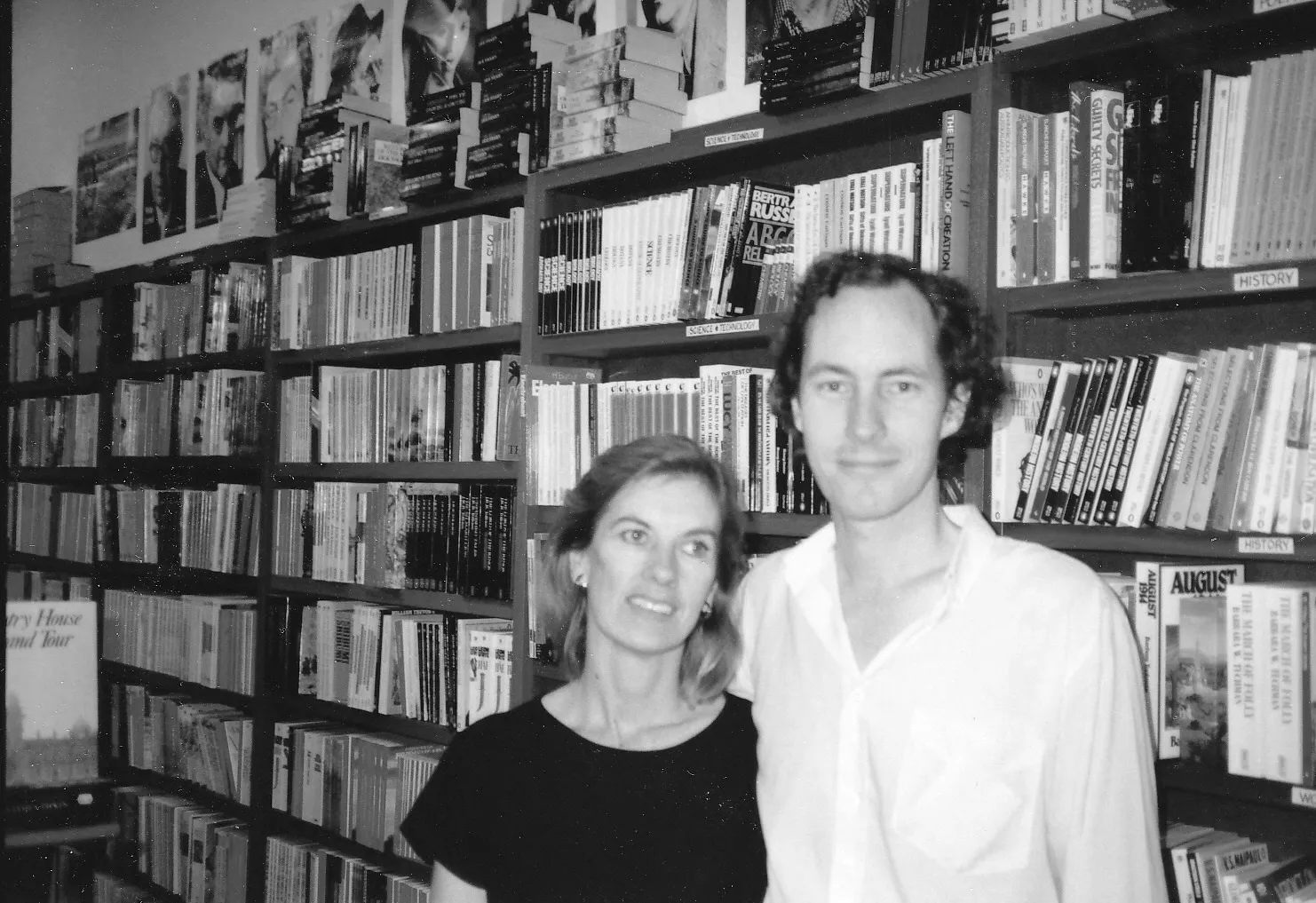
Before there was eBooks.com, there was a bookshop.
Our founders, Trudy and Stephen Cole, spent 15 years running a bricks-and-mortar community bookshop. Long before they were thinking about EPUB files, online reading or mobile apps, they were ordering books, talking to customers, working with publishers and learning the peculiar business of helping people find something worth reading. That experience shaped eBooks.com more than any technology trend.
Traditional bookselling is an unusual kind of retailing. A good bookseller does not merely put products on shelves. There are far too many books for that approach to work. Booksellers make choices. They notice interesting new titles. They learn which books continue to matter years after publication. They recognise that the customer looking for a history of Byzantium is doing something rather different from the customer looking for a thriller to read on holiday.
That sensibility still influences the way we run eBooks.com.
Books are our reason for being We do not manufacture tablets or phones. We do not operate a general marketplace. We do not exploit ebooks to encourage people to buy some other product or join some unrelated service. We sell books. And while the technology surrounding books has changed since our physical bookshop days, we think the fundamental relationship between bookseller and reader should remain.
Real People
One of the great advantages of modern technology is its ability to help you navigate an impossibly large catalogue. Algorithms can be useful, and we use technology throughout the business where it helps customers find relevant books. But we have never believed that everything worth discovering can be reduced to a prediction.
Many of the books and collections you see featured on eBooks.com are selected by people. Our editorial team watches what is being published, notices books that deserve attention, follows developments across different fields and subjects, and occasionally chooses something simply because one of us thinks it is unusually good.
There is a difference between being shown a book because software has been watching you, and coming across a book because a well-read person thought it was interesting enough to put in front of you. Both approaches have their place.
The same principle applies when something goes wrong. Ebooks are wonderfully convenient, but they can also be technically complicated. There are different file formats, different devices, different reading systems and different forms of digital rights management. Occasionally a book doesn’t behave exactly as expected. When that happens, our help desk is staffed by real people. All of them have spent years working with ebooks and understand the oddities that arise when files, accounts, devices and reading software interact. If you need help, you can ask somebody who understands what an EPUB is, knows why a particular book may not be opening correctly and has probably seen something similar before.
We think that is worth preserving too.
The people behind eBooks.com
There is another kind of continuity at eBooks.com that is less visible from the outside. We are a small firm, and many of the people who work here have been with us for twenty years or more. Some joined when ebooks were still an experimental corner of publishing and have spent much of their working lives helping to build the systems we use today. That length of service has created something difficult to measure but enormously valuable: institutional memory.
These are exceptionally intelligent and kind-hearted people. More than any technology or business strategy, their judgement, decency and generosity have made eBooks.com what it is today, and helped make it a small but genuine force for good in the book world.
Our team remembers why particular decisions were made, how publishing standards evolved, which technical approaches worked and which did not, how the needs of publishers have changed, and the strange edge cases that can arise when millions of books from thousands of sources meet an equally varied collection of devices, operating systems and reading software. Over the years, that knowledge has accumulated.
This shared understanding extends from software architecture, file formats, accessibility and digital rights management to metadata, publisher relationships, customer support and the old-fashioned bookselling question of whether a particular book is worth putting in front of a reader.
And because the company is small, that knowledge is not divided into distant departments that rarely speak to one another. The people designing a reading feature can talk directly to the people who hear from customers using it. Developers understand something about bookselling. Booksellers understand something about technology. Customer-service staff know the peculiarities of ebook files and reading systems because they have spent years solving real problems for real readers.
That cross-pollination has shaped eBooks.com.
We sometimes think of our technology as the machinery of the business, but the people are its memory, judgement and connective tissue. They know where the awkward corners are. They notice when something that looks sensible on a diagram will be confusing to a reader. They know when an apparently minor change to a file-handling process could cause trouble for a publisher or a customer months later.
Our team has lived through almost every major change in commercial ebooks, and has repeatedly rebuilt parts of the business as technologies, standards and reading habits evolved.
What persists is not the technology. It is the accumulated understanding behind it.
For a company our size, we think that is one of our greatest strengths. eBooks.com is not simply a website, a catalogue or a collection of software. It is a group of people who have spent a substantial part of their lives together, learning how digital books work — and how to make them work better for the people who read them.
Independent by choice
eBooks.com is privately held. We are not owned by a technology conglomerate, hardware manufacturer, search behemoth or global retail group. We have no proprietary reading device that customers must buy, and no larger commercial ecosystem into which we are trying to draw them.
That independence gives us a slightly different set of incentives.
Wherever practical, we favour established publishing standards such as file formats (EPUB and PDF), DRM protocols (LCP and Adobe) and accessibility benchmarks (WCAG). We offer DRM-free ebooks where publishers permit them, and we support standards-based reading technologies rather than deliberately creating incompatibilities that keep readers locked inside a single manufacturer’s world.
That does not mean every ebook can be copied freely from one device to another. Publishers determine what forms of digital rights management apply, and different reading devices support different formats and protection systems. But our underlying philosophy is straightforward: restrictions should exist because they are necessary, not because locking a reader into an ecosystem is commercially useful to us. Our own reading platform reflects the same idea.
Customers can read books directly in a web browser using our Online Reader, or use the eBooks.com apps on iOS and Android, including for offline reading. Desktop readers such as Thorium provide another standards-based option.
The aim is to make the technology inconspicuous. The best reading software eventually disappears from your awareness and leaves you alone with the book.
Reading should adapt to you
Digital books can do something that printed books cannot: they can change.
For most of the history of publishing, readers were presented with a fixed object. The typeface, type size, line spacing, margins and page layout were decided before the book left the printer. If those decisions made the book uncomfortable for a particular reader, there was very little the reader could do about it.
Digital reading gives us the opportunity to reverse that relationship.
Our current generation of reading software has been designed around the idea that the book should adapt to the person reading it. You can adjust typography, spacing and layout to make a book more comfortable. Our mobile apps and reading systems are designed to work with platform accessibility technologies such as VoiceOver and TalkBack, and we continue to improve the experience for people with different visual, motor and reading needs.
Some readers have impaired vision. Some have dyslexia. Some simply find one typeface easier to read than another. Some prefer wider spacing or larger margins. Others want a very compact page. A person reading late at night may want an entirely different presentation from someone reading the same book outdoors in bright sunlight.
There is no single perfect reading layout because there is no single kind of reader, and good reading software should acknowledge that.
We also think accessibility should be treated as part of good product design rather than as an additional feature bolted onto a product later. If an interface is clear, adjustable and compatible with assistive technology, it usually becomes better for everybody.
Depth in academic and professional titles
We sell a lot of popular fiction, biography, history, politics and the books people are talking about this week. But one of the less obvious characteristics of eBooks.com is the depth of the catalogue beyond mainstream trade publishing.
Over decades we have built relationships with academic, scientific, technical, medical and professional publishers around the world. As a result, a surprisingly large part of our business involves people who are looking for something very specific: a researcher seeking a specialist monograph, an engineer looking for a technical reference, a lawyer buying a professional title, or a student trying to find an academic text.
Sometimes the most important book to a customer is not a bestseller. It may be a book almost nobody else is looking for. We like that part of the business. It is a reminder that bookselling is not simply about promoting whichever twenty titles are currently receiving the greatest publicity. We want eBooks.com to highlight obscure, unexpected titles as well as the famous ones.
Our catalogue now contains millions of titles, and its breadth is one of the consequences of having spent so many years working directly with publishers large and small.
The book world is an ecosystem
Readers naturally see a bookshop from one end of the transaction: they find a book, buy it and start reading. Behind that simple process sits a large and complicated ecosystem of authors, editors, translators, publishers, designers, distributors, technology companies, booksellers and libraries. And that ecosystem matters.
Our relationships with many publishers go back decades. We try to deal with them as long-term partners because, without healthy publishers, including specialist and independent publishers, there eventually become fewer interesting books for readers to discover.
There will always be commercial negotiations between retailers and publishers. That is part of any marketplace. But there is a difference between negotiating hard and believing that every other participant in the supply chain exists merely to be squeezed.
We want digital bookselling to remain diverse.
A world in which authors write, publishers take risks, independent booksellers thrive and readers can choose between genuinely different retailers is healthier than one in which every book passes through the same handful of gates.
Buying from an independent bookseller is a small decision. Collectively, however, those decisions help preserve a more vibrant book culture.
Privacy
There is another consequence of being a bookseller rather than an advertising platform. We do use data to operate and improve our services. We need information to run accounts, process transactions, improve software, understand whether features work and help customers when something goes wrong.
But selling information about our customers is not our business. We do not sell your personal information to advertisers, and we have no reason to build an advertising profile from the things you read. There is something personal about a reading history, and that makes it your business and no-one else’s. The books you chooses can reveal things: your interests, ambitions, anxieties, beliefs, work, family and private curiosities. A bookstore inevitably acquires some knowledge of its customers. We believe that creates a responsibility, not a commercial opportunity.
Permanence
There is one final difference that is difficult to manufacture: time.
Digital services can feel strangely temporary. The short history of the internet is full of companies that appeared suddenly, grew rapidly and disappeared just as quickly. This can be a worry when you are buying books you may want to return to years later.
eBooks.com began in 1997 and opened its online doors in 2000. Since then we have lived through the dot-com boom and bust, the arrival of broadband, the rise of smartphones and tablets, the Kindle revolution, enormous changes in publishing, several generations of ebook formats and digital rights management, and more predictions of the death of the book than we could possibly count.
We are still here.
People who bought books from us many years ago still return. Publishers whose first digital titles arrived when ebooks were an experiment are still working with us today. And the company remains independent and closely involved in the business it originally set out to build.
Naturally, our company has changed enormously along the way. The sophistication of our mobile apps, browser-based reader and reading technology were unimaginable to us in 1997.
But the basic idea hasn’t changed:
- Use technology to make books easier to find and easier to read.
- Give readers choices rather than trapping them unnecessarily.
- Treat publishers and authors as part of the same book world we belong to.
- Have real people available when customers need help.
- And remember that, impressive though the technology may be, the technology is not really the point. The book is.
If you are new to eBooks.com, welcome. Look around. Browse the books our editors have been noticing, search for something wonderfully obscure, try our reading apps, or simply find the book you came looking for.
We hope you’ll stay awhile.
